Predictive Knitwear
Bridging design and manufacturing with AI
The Knitwear Communication Gap
While advanced knitting machines can create highly functional, seamless garments, a significant gap exists between a designer’s creative vision and the technical programming required by the machine. The relationship between a fabric’s visual appearance, its physical form, and its technical performance is subtle and complex. This disconnect leads to a slow, costly development cycle that relies on a fragmented workflow: a designer’s concept is translated by an engineer, a physical sample is produced, and only then can its properties be evaluated. This process hinders rapid and informed creative exploration.


Machine Learning for Functional Performance
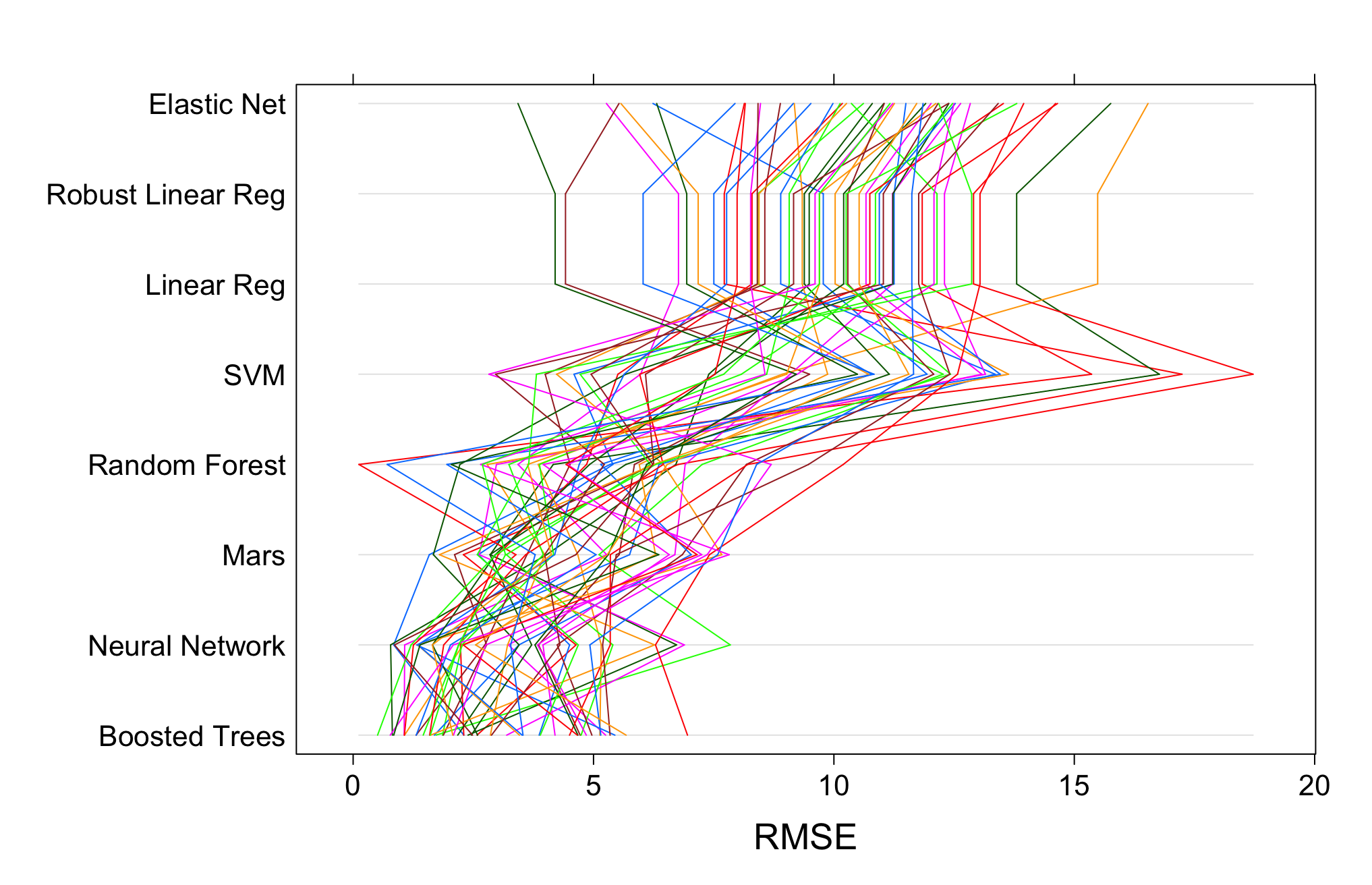
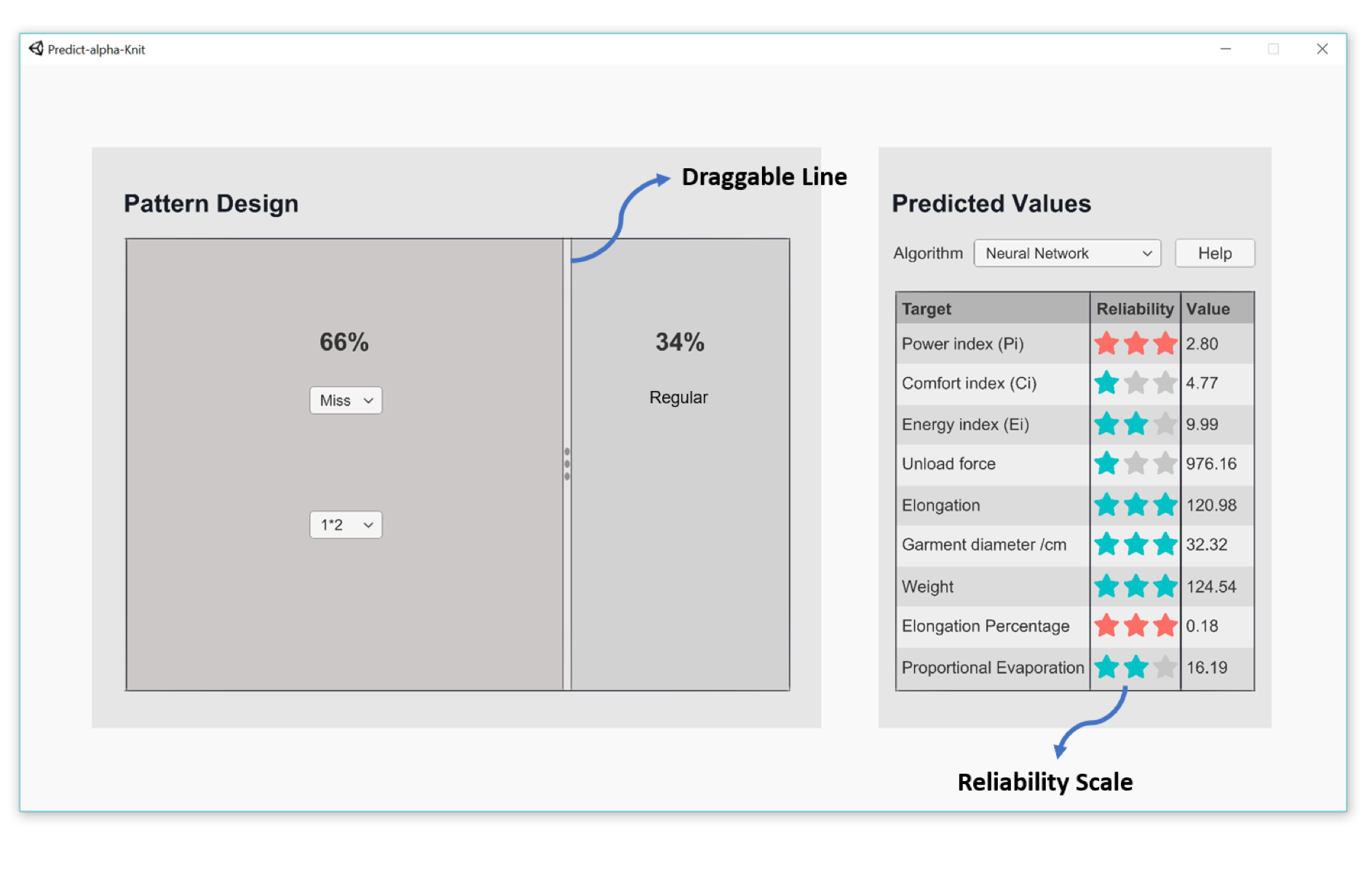
This approach focused on predicting a fabric’s functional properties. We systematically produced 36 unique knit samples, varying key parameters like stitch type and structure. These samples then underwent rigorous lab testing to quantify performance metrics like compression, weight, comfort, and evaporation. We used this dataset to train machine learning algorithms, resulting in a prototype with a simple 2D interface. This tool allows designers to select knitting parameters and receive instant numerical feedback on the predicted performance, helping to optimize a garment’s functionality without creating physical samples.


Parametric Simulation for 3D Form-Finding
This approach focused on predicting a fabric’s physical form and behavior under tension. We developed a novel method using parametric CAD software (Grasshopper) to simulate the tensile state of a tubular fabric. First, we built physical models to analyze the fabric’s elasticity. We then created a digital model that could accurately replicate these measured properties. By comparing the physical and digital results, we validated the simulation and discovered a clear linear relationship between the fabric’s deformation and a key simulation parameter called “rest length factor”.
This resulted in a 3D parametric simulation that gives designers an intuitive way to work with the complex forms that emerge from stretched textiles. This form-finding tool was successfully applied to design a 3D knitted lamp, which artfully uses the changes in density and light transmittance of the fabric under tension.


My Role: Principal Investigator
As the project lead, I initiated and directed this interdisciplinary research, working at the intersection of industrial design, computer science, architecture, and textile engineering. My role involved:
- Defining the research vision and core research questions.
- Designing the experimental methodology for data collection, physical testing, and simulation.
- Overseeing the development of machine learning and parametric models in collaboration with researchers and students.
- Leading the user interface design process and managing industry collaborations with partners like Santoni Shanghai.
- Co-authoring of papers (ten Bhömer et al., 2019; ten Bhömer et al., 2019)
Collaborators & Partners
Academic Collaborators (Xi’an Jiaotong-Liverpool University)
- Computer Science: Prof. Hai-Ning Liang, Dr. Difeng Yu, Yanyan Meng
- Architecture: Prof. Thomas Wortmann , Mingyu Wang
- Industrial Design: Yuanjin Liu, Yifan Zhang, Tong Zhang
Industry Partners
- Studio Eva x Carola: Eva de Laat & Carola Leegwater
- Santoni Shanghai
Funding
This work was supported by the National Natural Science Foundation of China (NSFC, Grant No. 51750110497) and by Xi’an Jiaotong-Liverpool University (Grant No. RDF-13-02-19 and RDF-17-01-54).